
Flake flooring is a decorative flooring system created by embedding coloured flakes into a resin-based coating applied over prepared concrete. It combines the performance of a coated floor with a customisable decorative finish, making it popular for garages, workshops and other high-use spaces. But what is epoxy flake flooring, and how does it differ from a standard epoxy floor?
If you’re looking at options for an old or unfinished concrete floor, you may have come across flake flooring, epoxy flooring and epoxy flake flooring. Although these terms are sometimes used interchangeably, they don’t all mean exactly the same thing.
Understanding the difference can help you determine which flooring system is appropriate for your garage, workshop or other space.
In this guide, we will explain what is flake flooring, what is epoxy floor, what is epoxy flake flooring, how the system is installed, what to consider before choosing it and how it compares with other concrete flooring options.
What Is Flake Flooring?
Flake flooring is a decorative flooring system where coloured flakes are broadcast into a wet coating and then sealed beneath a protective topcoat. The result is a multi-coloured, textured-looking finish that can transform an ordinary concrete floor.
The flakes are available in different colours and combinations, allowing the appearance of the floor to be customised.
A typical flake flooring system consists of:
- A prepared concrete substrate
- A primer or base coating
- An epoxy coating
- Decorative flakes
- A protective seal coat
The decorative flakes are only one component of the system. The condition and preparation of the concrete underneath are equally important.
What Are the Flakes Used in Flake Flooring?
The flakes are small decorative chips designed to be distributed across the wet coating. They can be selected in different colours and combinations to create anything from subtle neutral finishes to more contrasting decorative patterns.
The purpose is primarily aesthetic, but the variation created by the flakes can also make everyday dust and minor marks less visually prominent than they might be on a completely uniform floor.
Why Are Coloured Flakes Added to Epoxy Flooring?
A plain epoxy floor can provide a clean, consistent appearance, but adding decorative flakes gives the surface considerably more visual variation. Flakes can help:
- Create a custom appearance
- Add colour variation
- Break up a large floor area visually
- Complement garage cabinetry and walls
- Create a more finished appearance than bare concrete
- Make minor everyday marks less noticeable
What Is an Epoxy Floor?
An epoxy floor is a flooring system created by applying an epoxy coating over a properly prepared concrete surface. Epoxy is typically supplied as a resin and hardener that react to form a cured coating.
The resulting surface can be designed for different environments and applications. Depending on the system, epoxy flooring can be:
- Solid coloured
- Decorative
- Glossy
- Textured
- Metallic
- Combined with flakes or other aggregates
Epoxy is used in residential, commercial and industrial environments because the coating can be formulated for different performance requirements.
How Does Epoxy Flooring Work?
Epoxy flooring starts with a prepared substrate.
The concrete needs to be appropriately cleaned and prepared before the coating is applied. Once the epoxy components are combined, the material is applied to the prepared surface and allowed to cure. As it cures, the liquid coating forms a hard, continuous surface.
The finished result depends on several factors, including:
- Concrete condition
- Surface preparation
- Product selection
- Application technique
- Coating thickness
- Curing conditions
- Protective topcoat
This is why epoxy flooring should be considered a system, rather than simply a type of paint.
What Is Epoxy Flake Flooring?
Epoxy flake flooring is a decorative epoxy flooring system where coloured flakes are embedded into the epoxy coating before a protective seal coat is applied.
It can be thought of as three main components:
Prepared concrete → epoxy coating → decorative flakes → protective seal
The epoxy provides the coating system, while the flakes provide the distinctive decorative appearance. The final seal coat helps complete the flooring system and protects the decorative layer.
What Is the Difference Between Epoxy Flooring and Epoxy Flake Flooring?
The main difference is the inclusion of decorative flakes.
Feature | Standard Epoxy Flooring | Epoxy Flake Flooring |
Base | Prepared concrete | Prepared concrete |
Main coating | Epoxy | Epoxy |
Decorative flakes | Not necessarily included | Included |
Appearance | Often uniform | Multi-coloured and varied |
Colour options | Solid or decorative | Multiple flake combinations |
Typical visual effect | Clean and consistent | Textured-looking and decorative |
Garage applications | Suitable | Particularly popular |
Flake flooring is not a completely separate material from epoxy flooring. Instead, epoxy flake flooring is a specific type of decorative epoxy flooring system.
Why Is Flake Epoxy Flooring Popular for Garages?
Flake epoxy flooring is popular for garages because it combines a finished decorative appearance with a coating system designed for areas that experience regular traffic and use.
A garage can be one of the hardest-working spaces in a home. The floor can be exposed to:
- Vehicle tyres
- Foot traffic
- Dirt and dust
- Automotive fluids
- Water
- Tools and equipment
- Storage items
- Frequent cleaning
A finished flooring system can therefore change both the appearance and practicality of the space.
RenuCrete’s flake epoxy garage flooring service is designed specifically for garage environments and is described as stain- and scratch-resistant, durable and easy to maintain.
Is Flake Flooring Good for a Garage?
Flake flooring can be a practical choice for a garage because the floor has to cope with more than ordinary foot traffic. Vehicles can bring in water, dirt, grit and other contaminants, while maintenance activities can introduce automotive fluids and other spills.
The flooring system therefore needs to be considered in relation to how the garage is actually used. For example, homeowners may want a surface that:
- Is easier to clean after vehicle or maintenance work
- Provides a finished appearance instead of exposed concrete
- Can withstand regular vehicle and pedestrian traffic
- Helps make dust and everyday marks less visually prominent
- Complements existing garage storage and cabinetry
The condition of the existing concrete is also important. A suitable coating system cannot compensate for an unsuitable substrate, which is why the floor should be assessed and prepared before installation.
Can Flake Epoxy Flooring Be Used Outside a Garage?
Yes, but the requirements of the space should determine the flooring system rather than simply transferring a garage specification to another environment.
A commercial or industrial floor, for example, can be exposed to different levels of traffic, chemicals, equipment, moisture or operational demands. A utility area might have completely different requirements again.
Before selecting a flake epoxy system for another application, consider:
Consideration | Why It Matters |
Traffic level | Determines the type of coating system required |
Chemical exposure | Some environments may require specialised chemical resistance. |
Moisture | Can affect substrate preparation and coating suitability |
Slip resistance | Can be important in areas exposed to water or liquids |
Cleaning methods | Frequent or aggressive cleaning can influence product selection. |
Surface condition | Existing concrete must be suitable for the proposed system. |
This means flake epoxy flooring should be specified according to the conditions it will face, rather than assuming that the same system is appropriate for every location.
What Are the Benefits of Epoxy Flake Flooring?
Epoxy flake flooring combines several practical and visual characteristics.
Is Flake Epoxy Flooring Durable?
A professionally installed epoxy system can provide a hard-wearing surface suitable for areas exposed to regular traffic. However, durability is not determined by the epoxy product alone.
The result also depends on:
- Concrete preparation
- Coating system
- Application technique
- Traffic levels
- Chemical exposure
- Maintenance
This is why installation quality is an important part of the flooring system.
Is Flake Flooring Easy to Clean?
A properly sealed floor can be easier to clean than unfinished concrete. Dust and dirt can be removed through normal sweeping and mopping, while spills can be addressed without dealing with the porous surface of an unfinished slab.
The specific cleaning products should follow the recommendations for the flooring system installed.
Does Flake Flooring Hide Dirt and Marks?
One practical characteristic of a flake finish is its visual variation. Instead of a single uninterrupted colour, the floor contains multiple tones and small decorative patterns.
This can make everyday dust, small marks and minor signs of use less visually prominent. It does not mean the floor does not become dirty. It simply means the decorative pattern can make everyday garage use less visually obvious.
Can You Choose Different Flake Colours?
Yes. Different flake colour combinations can produce very different visual results.
RenuCrete offers a range of colour options for our flake flooring systems, allowing the appearance to be selected according to the space. When choosing a colour, consider:
- Garage wall colour
- Lighting
- Cabinetry
- Vehicles
- Existing finishes
- Whether you want a lighter or darker appearance
How Is Epoxy Flake Flooring Installed?
A professional epoxy flake floor is installed through a series of preparation, coating, decorative and sealing stages. The process is considerably more involved than simply applying epoxy to concrete.
RenuCrete’s installation process includes site inspection, concrete preparation, epoxy coating, decorative flake application, curing and a protective Tetrathane seal coat.
Step 1: Inspect the Existing Concrete
The first step is assessing the existing floor. RenuCrete begins with a site inspection to determine the condition of the concrete and the preparation required. The assessment can identify issues such as:
- Existing coatings
- Contamination
- Surface deterioration
- Staining
- Areas requiring additional preparation
This prevents the installation from being treated as a one-size-fits-all process.
Step 2: Prepare and Clean the Surface
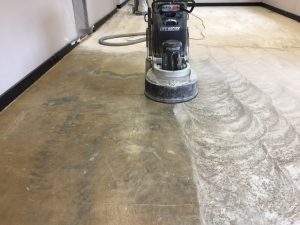
Proper concrete preparation is one of the most important stages of an epoxy installation. RenuCrete’s process includes acid etching followed by high-pressure cleaning. Grinding can also be used where required based on the condition of the concrete.
Preparation removes contaminants and creates a suitable surface for the coating system. Skipping or reducing this stage can affect the performance of the finished flooring.
Step 3: Apply the Epoxy Base Coat
Once the concrete has been prepared, the first epoxy coating is applied. RenuCrete describes applying the prime coat using a squeegee technique to control the application. This establishes the initial coating layer across the prepared substrate.
Step 4: Allow the First Coat to Cure
The first coat needs to cure before subsequent stages are completed. The process allows the epoxy to cure overnight before the second coating stage.
Curing requirements can vary depending on the product and environmental conditions, so the manufacturer’s specified process should be followed.
Step 5: Broadcast the Decorative Flakes
This is the stage that creates the characteristic flake appearance. The flakes are distributed into the wet epoxy coating while it is suitable for receiving them.
RenuCrete notes that timing the flake application correctly helps the flakes settle into the coating and reduces the risk of delamination.
Step 6: Apply the Protective Seal Coat
Once the epoxy and flakes have hardened, a protective seal coat is applied. RenuCrete’s process uses a Tetrathane seal coat over the flake system.
This completes the installation and provides the final surface finish.
How Long Does Epoxy Flake Flooring Take to Install?
The installation time depends on the size and condition of the floor, the amount of preparation required and the curing requirements of the coating system. Factors that can affect the project timeframe include:
- Garage size
- Existing concrete condition
- Required grinding or preparation
- Number of coating stages
- Product curing times
- Site conditions
A specific timeframe should therefore be confirmed after the existing floor has been assessed.
How Do You Maintain Flake Epoxy Flooring?
Routine maintenance for flake epoxy flooring generally involves keeping the surface free from dirt, debris and spills while following the cleaning recommendations for the installed system.
How Do You Clean Flake Flooring?
A basic maintenance routine can include:
- Sweeping or vacuuming loose dirt.
- Cleaning spills promptly.
- Mopping when required.
- Using suitable cleaning products.
- Avoiding abrasive cleaning methods that could damage the finish.
The exact cleaning method should be based on the manufacturer’s recommendations for the coating and seal system.
Does Flake Flooring Need Special Maintenance?
It does not require the same type of maintenance as untreated concrete, but that does not mean it can be completely ignored. Regular cleaning helps prevent dirt and contaminants from accumulating.
It is also important to address spills and avoid using chemicals or equipment that are not suitable for the coating.
Is Flake Epoxy Flooring Slip Resistant?
Slip resistance depends on the complete flooring system and should not automatically be assumed simply because a floor contains decorative flakes.
Factors that can influence slip resistance include surface texture, seal coat, aggregate, anti-slip additives, environmental conditions and the presence of water or other liquids.
If slip resistance is important for your garage or commercial space, discuss this requirement before selecting the system.
RenuCrete also provides dedicated non-slip flooring solutions where additional slip resistance is required.
How Does Flake Flooring Compare With Other Garage Floors?
There is no single flooring system that suits every garage. The right choice depends on the condition of the existing concrete, the appearance you want, how the space will be used and the type of maintenance you expect.
Flooring Option | Appearance | Customisation | Surface / System | Key Difference |
Flake Epoxy | Decorative, multi-coloured | High – different flake colours and combinations | Epoxy coating with decorative flakes and protective seal | Creates a finished decorative surface over prepared concrete |
Bare Concrete | Natural or unfinished | Low | Exposed concrete | Uses the existing concrete without a decorative coating system |
Plain Epoxy | Clean, consistent and generally uniform | Moderate | Epoxy coating without decorative flakes | Provides a coated finish without the visual variation of flakes |
Ground & Sealed Concrete | Natural, polished or industrial | More limited | Mechanically prepared concrete with sealer | Retains the appearance of the concrete rather than covering it with an epoxy flake system |
Garage Tiles | Modular and patterned | High – different tile colours and designs | Individual interlocking or bonded tiles | Installed as separate pieces rather than applied as a continuous coating |
What Should You Check Before Installing Flake Flooring?
Before choosing a colour or booking an installation, there are several practical questions worth asking.
- Is the Existing Concrete Suitable? The concrete needs to be assessed before the coating system is selected. Its condition can affect preparation requirements and the expected outcome.
- Does the Concrete Need Grinding? Not every floor requires the same preparation. Some surfaces may be adequately prepared through cleaning and etching, while others may require mechanical grinding because of their condition or existing contamination.
- Are There Cracks, Oil or Contamination? Existing problems should be identified before coating. Oil, grease, dirt, previous coatings and damaged areas can all affect preparation requirements.
- What Finish Do You Want?
Consider:
- Flake colour
- Flake combination
- Coverage
- Gloss level
- Texture
- Slip resistance
Having these decisions made before installation helps avoid surprises later.
What Are the Common Mistakes to Avoid With Flake Epoxy Flooring?
1. Applying Epoxy Without Proper Surface Preparation
A coating applied over an unsuitable surface may not perform as expected. Preparation should be treated as part of the installation rather than an optional preliminary step.
2. Ignoring Existing Concrete Damage
Cracks, contamination and deterioration should be assessed before the decorative system is installed. A new coating does not automatically solve every underlying concrete problem.
3. Choosing a Colour Without Seeing a Sample
Colours can appear different depending on lighting and surrounding surfaces. Where possible, review actual samples before making a final selection.
4. Using the Floor Before It Has Properly Cured
A newly installed floor needs to follow the specified curing process before being subjected to normal traffic. The installer should provide clear instructions about when the floor can be walked on, driven on and cleaned.
5. Assuming Every Epoxy System Is the Same
Different products have different specifications, application requirements and intended uses. Ask the installer what system is being proposed and why it is appropriate for your particular space.
6. Choosing an Installer Based Only on Price
Two quotes can appear similar while involving very different preparation methods and coating systems. When comparing quotes, look at:
- Surface preparation
- Products used
- Number of coating stages
- Seal coat
- Warranty
- Installation process
- Project timeframe
The cheapest quote is not necessarily the same scope of work as another quote.
Is Flake Epoxy Flooring Right for Your Sydney Garage?
Flake epoxy flooring can be an option for Sydney homeowners who want to transform an existing concrete garage into a more finished and decorative space.
RenuCrete’s flake epoxy garage flooring system is designed around the existing condition of the concrete, with the preparation and coating process adapted to the requirements of the individual floor.
If you are considering flake epoxy garage flooring in Sydney, a professional assessment can help determine whether the system is appropriate for your concrete and what preparation will be required.
Contact RenuCrete to arrange a measure and quote for your garage flooring project.
Final Thoughts: What Is Flake Flooring?
Flake flooring is a decorative concrete flooring system that combines epoxy coating with coloured flakes and a protective seal coat.
Understanding the difference between what is flake flooring, what is epoxy floor and what is epoxy flake flooring makes it easier to compare flooring options and determine what can be suitable for your garage.
The appearance of the finished floor is only one part of the decision. The condition of the concrete, preparation process, coating system, installation technique and intended use all contribute to the final result.
For a garage in Sydney, the best starting point is to have the existing concrete assessed and discuss the flooring requirements with an experienced installer.
RenuCrete provides flake epoxy garage flooring and other concrete flooring solutions across Sydney.
Frequently Asked Questions
Yes. Depending on the damage, individual areas can potentially be repaired. The damage should first be assessed by a professional.
Cracks should be assessed and addressed before the coating is installed. The required repair depends on the type and extent of the crack.
Its lifespan depends on the concrete preparation, flooring system, installation quality, traffic and maintenance.
Not necessarily. Existing concrete can be coated if it is suitable and properly prepared.
Yes. Temperature and environmental conditions can affect epoxy application and curing, so installation should follow the product requirements.